
Need mold and radon inspections in Burlington, KY? Learn warning signs, testing steps, hidden risks, and when professional property testing is needed.
Why Mold and Radon Testing Matters for Your Home
Some property problems are easy to notice. A leaking faucet, damaged roof shingle, or broken window gives homeowners an obvious sign that something needs attention. Mold and radon can be different because potential concerns may exist without immediately creating clear visual evidence throughout the property.
Mold commonly develops where excess moisture is present, including basements, bathrooms, crawl spaces, areas around plumbing, and locations affected by previous leaks or water intrusion. Radon presents a different challenge because it cannot be identified by sight or smell and requires testing to measure its presence.
Northern Kentucky Inspections Inc provides mold and radon inspections along with plumbing and septic scoping, pest control, excavation, drainage, foundation, and other property services throughout Northern Kentucky. The company states that its inspection work uses specialized testing equipment and detailed reporting to help property owners better understand conditions within their homes.
Knowing when to schedule professional testing can help homeowners, buyers, and property managers make more informed decisions instead of relying on visual observations alone.
Common Signs That May Justify a Mold Inspection
Visible mold growth is one reason to schedule testing, but it is not the only warning sign.
Mold often develops in places where moisture persists. Some affected areas may be concealed behind walls, beneath flooring, around plumbing lines, or in other spaces that homeowners rarely inspect.
Possible warning signs include:
- Persistent musty or earthy odors
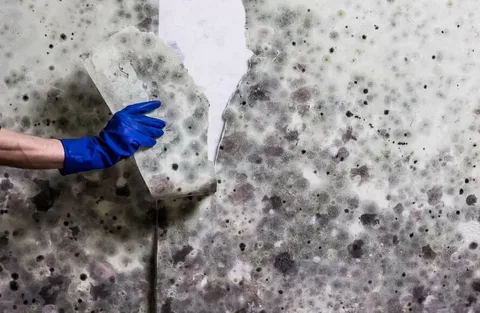
- Dark or unusual staining on walls or ceilings
- Previous plumbing leaks
- Water damage around windows or doors
- Damp basement or crawl-space conditions
- Condensation that repeatedly forms indoors
- Discoloration around plumbing fixtures
- Moisture stains beneath sinks
- Areas that remain damp after water intrusion
- Visible growth on building materials
These signs do not automatically prove that mold is present. Moisture staining, dirt, and other materials can sometimes look similar from a distance.
Professional inspection helps determine whether additional testing is appropriate rather than assuming every dark mark is mold.
What Happens During Professional Mold Testing?
Professional mold and radon inspection services are designed to evaluate conditions that may not be obvious during an ordinary walk-through.
According to the company’s service information, mold inspections may involve specialized equipment, sample collection, laboratory analysis, and reporting to help identify suspected mold conditions.
A typical evaluation may begin with a discussion about the property’s history.
An inspector may ask whether the home has experienced:
- Roof leaks
- Plumbing failures
- Flooding
- Basement moisture
- Drainage problems
- Previous mold concerns
- Recent renovations
- Persistent indoor odors
Visual inspection can then focus on areas where moisture is more likely to collect.
The goal should not simply be to find a visible spot. Understanding where moisture originates is important because mold-related conditions can return if the underlying water problem remains unresolved.
Why Moisture Is Important During a Mold Investigation
Mold growth generally requires moisture, which means identifying damp conditions can be an important part of understanding why a problem developed.
A property may have moisture from:
- Plumbing leaks
- Roof leaks
- Foundation seepage
- Condensation
- Poor drainage
- High humidity
- Appliance leaks
- Water intrusion around doors or windows
For example, cleaning visible staining without correcting a continuing plumbing leak may leave the conditions that allowed the problem to develop in the first place.
Homeowners should therefore think of mold inspection and moisture investigation as related steps.
If staining appears near a ceiling, the inspector may consider whether there has been roof or plumbing leakage. If moisture appears around basement walls, drainage or foundation conditions may also deserve attention.
The exact cause should be evaluated based on the property rather than assumed from one symptom.
What Is Radon Testing?
Radon testing serves a different purpose from mold inspection.
Radon is a naturally occurring radioactive gas that can enter buildings from the ground. Because people cannot reliably see, smell, or taste radon, testing equipment is needed to determine the concentration inside a property.
Northern Kentucky Inspections states that its radon inspection service uses testing methods designed to measure radon levels and provide homeowners with results they can review when deciding whether further action is appropriate.
Unlike a visible plumbing leak or damaged wall, homeowners cannot determine radon conditions simply by walking through the house.
That makes measurement an important part of evaluating potential exposure.
When Should Homeowners Consider Radon Testing?
Radon testing can be considered in several situations.
Property owners may decide to test when:
- Buying a home
- Selling a property
- Moving into a previously untested home
- Spending significant time in lower levels
- Completing major renovations
- Rechecking a property after previous testing
- Confirming conditions after mitigation work
- Wanting more information about indoor environmental conditions
Home buyers in particular may benefit from knowing more about the property before completing a purchase.
A home’s appearance does not indicate its radon level. A recently renovated property can still require testing just as an older home can.
Why Home Buyers Should Consider Mold and Radon Inspections
Buying a home involves evaluating far more than paint colors, flooring, countertops, and exterior appearance.
Hidden property conditions can influence future maintenance decisions and repair costs.
Mold testing may be worth considering when there is a history of water intrusion, musty odors, visible staining, basement moisture, or other suspicious conditions.
Radon testing provides information that a standard visual walk-through cannot provide.
For buyers arranging property inspections in Burlington, KY, the company’s location page specifically lists mold and radon inspections along with plumbing and septic scoping and pest inspections.
Having clear inspection information before purchasing a property can help buyers understand whether additional investigation, repairs, remediation, or mitigation should be discussed.
Can Mold Be Hidden Behind Walls?
Yes, moisture-related problems can sometimes develop in concealed spaces.
However, homeowners should avoid opening walls simply because they suspect mold.
Possible hidden problem areas can include:
- Behind drywall affected by previous leaks
- Beneath sinks
- Around plumbing penetrations
- Behind cabinets
- Beneath flooring
- Around windows
- Near foundation walls
- Around HVAC-related moisture sources
Musty odors or repeated staining can sometimes justify additional investigation, but the correct approach depends on the property.
Professional inspectors can use observations and appropriate testing methods to decide whether further investigation is needed.
Unnecessary demolition should not be the first step when non-destructive evaluation can provide useful information.
Why Musty Odors Should Not Be Ignored
A persistent musty smell is often associated with damp environments, although odor alone cannot confirm mold.
Pay attention to when and where the smell appears.
For example:
- Is it stronger in the basement?
- Does it occur after heavy rain?
- Is it concentrated near one bathroom?
- Does it appear around a utility room?
- Is it noticeable after the HVAC system starts?
These details can help narrow down potential moisture sources.
A recurring odor should be investigated rather than continually covered with air fresheners or other fragrances.
Finding the moisture source is usually more useful than masking the smell.
What Should You Do After Water Damage?
Water intrusion should be addressed promptly because damp building materials can create conditions where additional problems develop.
After a leak or water event:
- Stop the water source when possible
- Protect belongings from additional exposure
- Remove standing water safely
- Dry affected areas appropriately
- Check nearby materials for moisture
- Watch for staining or odors
- Consider professional evaluation when moisture is extensive or concealed
Do not assume a surface is completely dry simply because it looks dry from the outside.
Water can travel into wall cavities, flooring assemblies, cabinets, and other concealed spaces.
Persistent moisture concerns after water damage may justify a professional mold assessment.
Mold Testing vs. Visual Inspection
A visual inspection and mold testing are related but different.
Visual inspection can identify obvious moisture, staining, deterioration, or visible growth. It also helps the inspector understand how water may be moving through the property.
Testing can provide additional information when visual observations alone are not enough.
The appropriate process depends on why the inspection is being performed.
For example, visible damage around a known plumbing leak may require a different investigative approach than a persistent odor in a room where no visible moisture is present.
Professional evaluation helps determine which method is appropriate for the specific situation.
Why Accurate Reporting Matters
An inspection is most useful when property owners can understand the findings.
A clear report should help explain:
- Areas that were inspected
- Visible concerns that were observed
- Testing performed
- Results received
- Locations requiring attention
- Whether additional evaluation may be appropriate
Technical information without context can be difficult for homeowners to use.
The company’s website emphasizes clear reporting and recommendations as part of its inspection process.
Reports can also be useful when communicating with contractors or other professionals about corrective work.
How Mold Inspection Can Support Better Repair Decisions
Finding visible mold is only part of solving a moisture-related problem.
Before repairs begin, homeowners should understand why the affected material became damp.
Suppose staining develops repeatedly on a basement wall. Simply repainting the area may improve appearance temporarily, but the staining can return if moisture continues entering the space.
Likewise, replacing damaged drywall without correcting a leaking pipe can leave the underlying cause unresolved.
A careful inspection can help property owners determine what should be investigated before cosmetic repairs hide important evidence.
The goal is to address conditions logically:
- Identify the concern.
- Investigate the moisture source.
- Determine the extent of affected materials.
- Correct the water problem.
- Complete appropriate cleanup or remediation.
- Monitor the area afterward.
Mold and Radon Are Different Property Concerns
Although mold and radon inspections are often offered together, the two issues should not be confused.
Mold involves biological growth associated with moisture conditions.
Radon is a naturally occurring gas that must be measured through testing.
This means the inspection methods are different.
A home may have:
- Mold concerns without elevated radon
- Radon concerns without visible mold
- Both concerns
- Neither concern
Testing provides property-specific information instead of assuming one issue indicates the other.
Why Basement Conditions Deserve Attention
Basements can be important areas to evaluate because they are below or partially below ground and often contain plumbing, mechanical equipment, foundation walls, and storage.
Homeowners may notice:
- Damp walls
- Musty odors
- Water stains
- Condensation
- Plumbing leaks
- Floor moisture
- Cracks that admit water
- Previous flooding evidence
Some basements are finished, which can make moisture problems more difficult to see because wall and floor coverings conceal underlying surfaces.
For homeowners seeking mold and radon inspections in Elsmere, KY, the company’s local page confirms that it provides both services along with plumbing, septic, and pest-related inspections.
A professional assessment can provide more information when lower-level moisture or indoor environmental concerns are not obvious.
Practical Ways to Reduce Moisture Problems
Homeowners cannot prevent every water problem, but routine observation can make developing issues easier to catch.
Useful habits include:
- Repair plumbing leaks promptly
- Keep gutters and downspouts functioning
- Watch basement walls after heavy rainfall
- Check underneath sinks periodically
- Investigate recurring condensation
- Maintain bathroom ventilation
- Watch ceilings for new staining
- Check around appliances that use water
- Address drainage problems near the structure
- Avoid ignoring persistent musty odors
These steps are not substitutes for professional testing when a significant problem is suspected.
They simply help homeowners recognize changes sooner.
When Should You Schedule Professional Testing?
Professional inspection may be appropriate when:
- You see suspected mold growth
- A musty odor persists
- The property recently experienced water damage
- Moisture stains repeatedly return
- You are purchasing a home
- You want information about radon levels
- A basement or crawl space remains damp
- Previous repairs did not solve a moisture problem
- You are concerned about hidden conditions
- You need documented inspection findings
The purpose of testing is to replace uncertainty with property-specific information.
Rather than assuming that every stain is mold or that a home has acceptable radon conditions because there are no visible problems, professional testing provides a more reliable basis for deciding what should happen next.
Conclusion
Mold and radon are two property concerns that may not always be obvious during everyday living. Mold can develop where moisture persists, sometimes in areas that are difficult to see, while radon requires dedicated testing because it cannot be detected through ordinary sight or smell.
Homeowners can help protect their properties by investigating leaks, moisture stains, musty odors, basement dampness, and previous water damage instead of ignoring recurring symptoms. Radon testing can also provide important information for current homeowners and people preparing to purchase a property.
Professional mold and radon inspections help establish what conditions actually exist so homeowners can make informed decisions about further evaluation, moisture correction, remediation, mitigation, or routine monitoring.
Frequently Asked Questions
What are the common signs that I may need a mold inspection?
Persistent musty odors, visible staining, previous leaks, basement moisture, water-damaged materials, and unexplained damp areas can justify professional evaluation. Testing may be helpful when the source or extent of the concern is unclear.
Can I tell if my home has radon without professional testing?
No. Radon cannot be reliably identified by sight, smell, or taste. Testing equipment is required to measure radon levels inside a property.
Should I get mold testing after a plumbing leak?
Not every small leak requires mold testing, but an inspection may be appropriate when water remained unnoticed, affected concealed materials, created persistent odors, or left areas damp for an extended period.
Is mold inspection useful when buying a home?
It can be especially useful when a property has visible moisture damage, musty odors, a history of leaks, basement dampness, or other conditions that suggest further investigation may be needed.
Why should a basement be checked for mold and radon concerns?
Basements can experience moisture, plumbing leaks, foundation-related water intrusion, and other conditions that may warrant mold investigation. Radon testing may also be performed in appropriate lower-level areas as part of evaluating a property’s radon concentration.
When should I schedule professional mold and radon inspections?
Consider professional testing when you notice persistent moisture or mold warning signs, are buying a property, have experienced water damage, want to understand radon levels, or need documented information about indoor property conditions.